English
 Русский
 Español
Routes
View multimodal transportation routes
Find in catalog


Depend on connections, terminals, schedules, and time buffers.

Compatibility of packaging, transshipment, and requirements of different transport modes.
Basic package and transport documents for each leg with a unified liability logic.

International supply chains, door-to-door, complex directions, and cost optimization.
In multimodal transportation, connections between transport modes play a key role. Even with stable operation on each leg, failures most often occur at nodes, during transshipment, or due to uncoordinated schedules.
Cargo parameters (weight, dimensions, packaging, conditions), points of origin and destination, deadlines, and priorities are determined. This is the basis for building the entire transport chain.
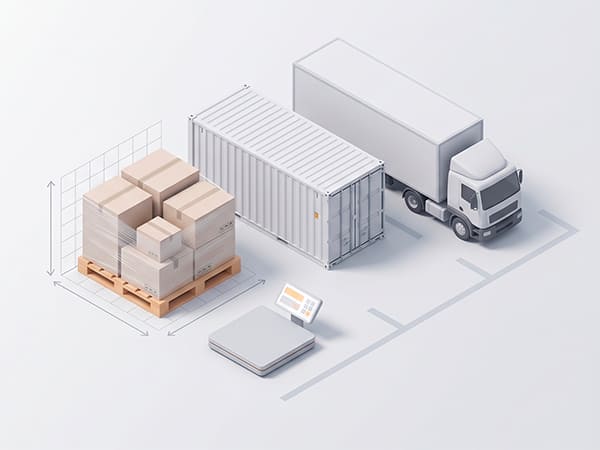
A transportation scheme is created using road, rail, sea, or air. Terminals, ports, stations, transshipment points, and potential cargo consolidation points are identified.
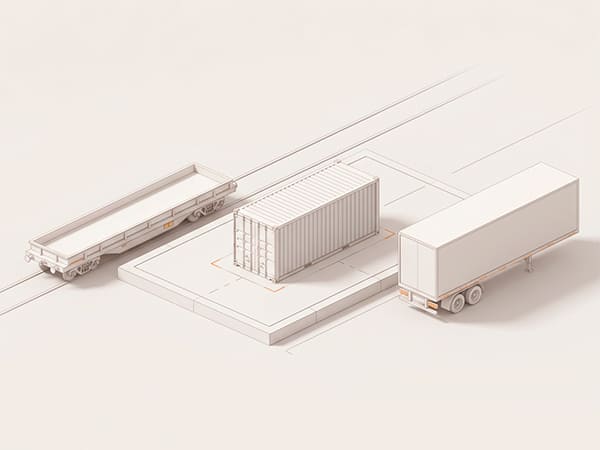
An assessment is made on whether the cargo can withstand transshipment, if containers and platforms are suitable, and if the cargo is permissible for each mode of transport. Temperature requirements, hazardous, and valuable cargo categories are taken into account.
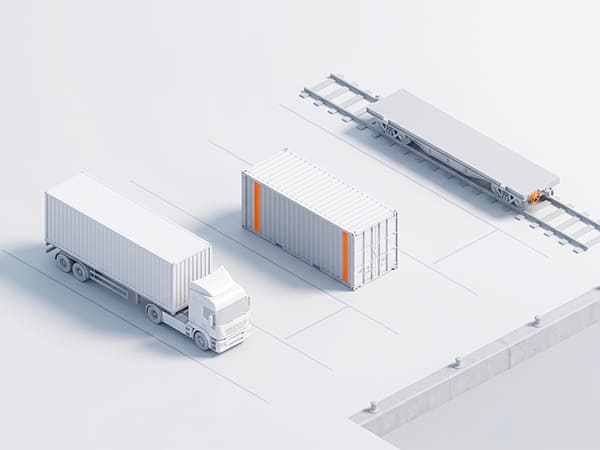
Schedules for all legs, departure and arrival dates, as well as terminal operations are coordinated. Time buffers are included for transshipment and potential deviations from the schedule.
Cargo moves through legs with transshipment and processing at nodes. Documents, seals, schedule adherence, and cargo condition are monitored until delivery to the recipient and completion of the transport.
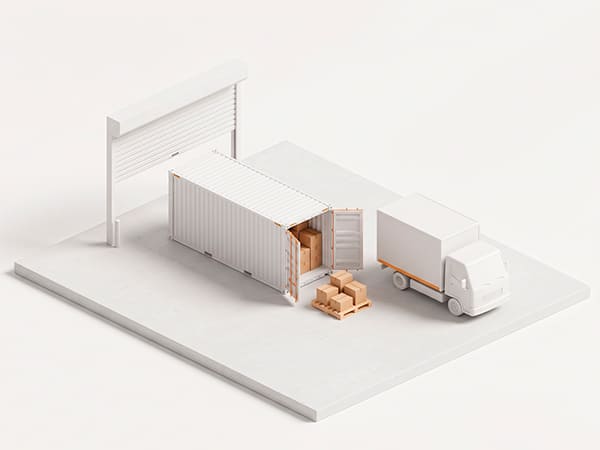
Multimodal schemes differ in where nodes are located and how much transshipment is allowed to optimize cost and time.
In multimodal transport, one of the main causes of delay is data inconsistency between different legs. All documents must contain identical information about the cargo.
It is important to understand that documents for different transport modes do not replace each other. The main task is to eliminate discrepancies between them.
Multimodal transport almost always involves transshipment between different modes of transport. Therefore, packaging must withstand not just one move, but multiple handling cycles at terminals and warehouses.
Multimodal delivery time is composed of the time on each transport leg and waiting time between them. It is the connections that most often determine the final transport duration.
Practical conclusion: an effective multimodal route is built around reliable connections and time buffers, not just the fastest individual section.
In multimodal transport, cost is formed not only by route length. The final value is influenced by the number of legs, terminal operations, cargo handling requirements, and the need for additional services.
In multimodal transport, it is important not only to organize individual legs but also for the contractor to manage the entire supply chain as a single system.
Multimodal transport is delivery using two or more modes of transport within a single logistics chain, e.g., road + sea + road or road + rail + road.
Because the deadline is composed not only of transport time but also of waiting between legs: terminals, transshipments, ship/train schedules, and other operations.
Time buffers between legs and document consistency are most important. These factors determine the stability of the entire chain.
When using one transport mode for the entire route proves too expensive, unstable, or technically inconvenient, and a combination allows finding a balance between time and cost.
Particularly sensitive are very fragile goods and goods requiring special handling conditions. For them, it is important to minimize the number of transshipments and reinforce packaging.
It is necessary to label each piece, record the number of pieces in documents, use strong packaging, and, if possible, conduct photo documentation during handover and acceptance.
It is necessary to ensure the continuity of the cold chain on every leg of the route, pre-agree on equipment requirements, and minimize long waits at terminals.
If the cargo has high value or its loss can lead to significant financial consequences, insurance is usually a rational decision. However, insurance does not replace proper packaging and transport management.
First, determine what is most important to you — cost, time, or risk control — and consider cargo restrictions. After that, compare available route options and send a request.